

Harry Potter is the most popular and most read children’s book of this decade. The children read the story and connect with the characters, learning valuable life lessons through their experiences. One of the most loved but also very vulnerable characters is Dobby, the elf. Dobby develops into a very mature character. Dobby experiences oppression, trauma and yet stays resilient and makes his final self-sacrifice. Dobby teaches to have hope, fight against injustice, and be a loyal friend despite being fearful of the powerful characters surrounding him.
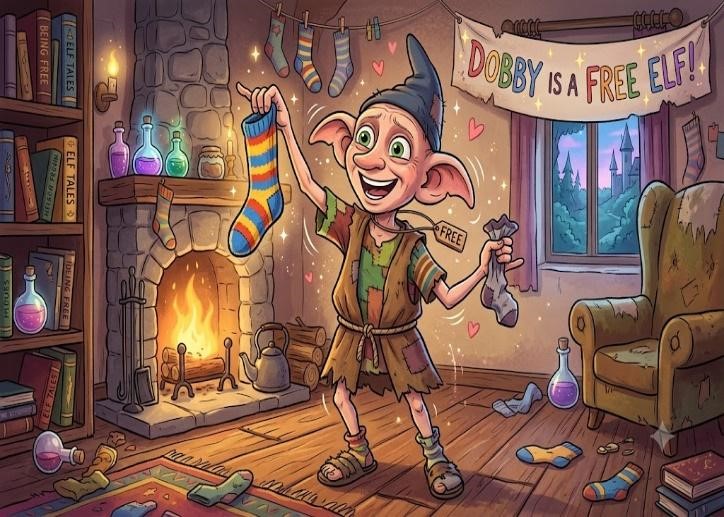
The famous sentence ‘Dobby is a free elf’ shows the significance of liberation to a kid. Whether a young mind can understand the depth or not, it would stick with the child. Dobby experienced a sense of freedom from oppression, disrespect, and humiliation. Dobby teaches that, due to the rules of the House Elves, he could not free himself. After the trick Harry played, Dobby felt empowered. For a long time, he had lived a life of obedience, fully aware of the Malfoy family’s malicious nature, which underscored his helplessness in achieving victory. Once Dobby was freed, he opened the way for other house-elves, paving a path for the entire community.
Let us see through the lens of developmental psychology.
Children will learn to be kind and empathetic: Dobby is an extraordinary character who starts off in a vulnerable position, constantly mistreated, yet brimming with kindness and courage! Despite the fear that grips him, he chooses to stand for honesty and justice, making him a true hero in the eyes of many. His story is a powerful testament to the effects of bullying, as he endures relentless torment at the hands of the Malfoys. Through Dobby’s struggles, readers are drawn into a whirlwind of emotion, learning the importance of empathy and the need to protect ourselves and others from the pain of bullying. Dobby’s journey inspires us to stand up for what is right and champion the cause of kindness in a world that desperately needs it!
Moral understanding: Kohlberg’s stages of moral development provide a framework for understanding how individuals evolve in their moral reasoning. In Stage 1, children follow rules primarily to avoid punishment. Dobby, the character from the Harry Potter series, exemplifies this stage. However, Dobby is not alone; many of us adhere to rules out of fear, regardless of whether those rules are just or beneficial.
As Dobby’s understanding of morality grows, he begins to seek ways to express his individuality and opinions. He assists and warns Harry Potter, recognising that it is the right thing to do, even if he does so in secret. This marks the beginning of Dobby’s progression to higher stages of moral development. He learns to discern what is harmful to himself and seeks friendship and approval from others, valuing loyalty and strengthening relationships.
Dobby starts making independent decisions about right and wrong and speaks out against the oppressive norms of their world, such as the enslavement of house-elves. Throughout history, many individuals have challenged superstitions and outdated practices accepted by society. Dobby embodies this struggle for justice in a manner that resonates with younger audiences.
Ultimately, Dobby reaches the highest stage of moral development when he acts following his internal conscience and sacrifices his life for a greater cause.
Prosocial Behaviour: Dobby is inherently kind. Despite being a little elf with little power, he used all that he could to help his friend, ignoring his well-being. For example, in Chamber of Secrets, he tries to stop Harry from coming back to Hogwarts. Dobby appreciated the effort Harry gave to free him till the end, and he deeply valued their friendship. Dobby is loyal, he teaches trust and commitment, and supporting others at their difficult times is a trait that is rarely found nowadays. Children reading or watching such acts can learn through social observational learning. As Bandura said, learning involves attention, retention, reproduction and motivation. Dobby, a cute little elf loved by all, would have the attention of the children; they will remember what they learnt, and if they try to imitate a bit too, that would be highly beneficial for the children’s well-being and society
Final Takeaway
Dobby is not the main character, still an outstanding example of character development. A journey from oppression to freedom. He left the Malfoys and searched for paid employment and work leave. This would bring dignity and recognition. A child will learn the importance of independence and true empowerment. It will also teach that one can take an unconventional path. He works at Hogwarts school but refuses to take a salary, which he thought was too much, showing that he had an ambition for independence and dignity, but was not greedy for luxury and comfort. He can negotiate for what he thinks he truly deserves. Brings to the self-determination theory, which promotes the idea of autonomy and competence.
 Sheikh The Wanderer