



“The best security blanket a child can have is parents who respect each other.” — Jane Blaustone
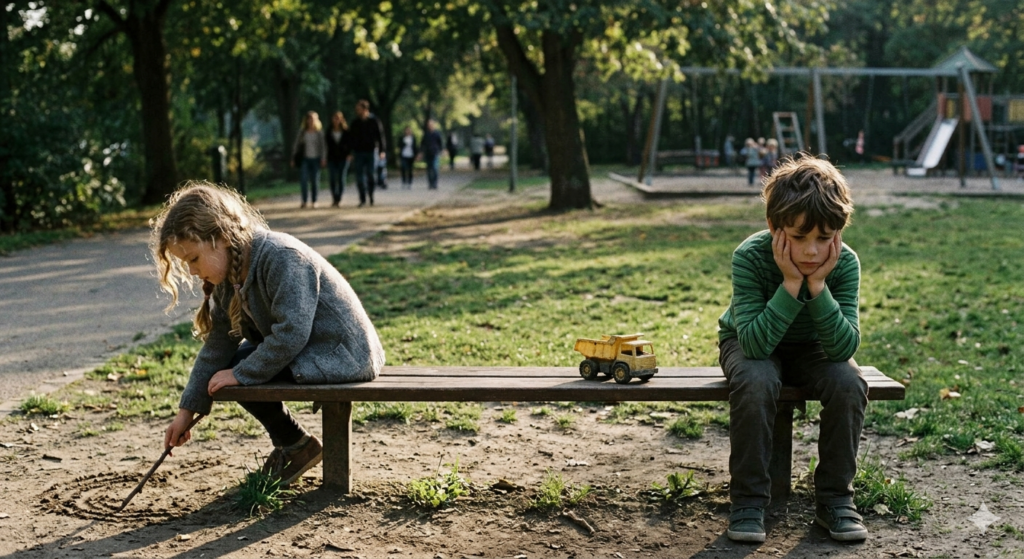
Understanding the Scale of Parental Separation and Its Consequences
Parental separation is one of the most emotionally disturbing events for everyone involved, especially children. In 2025, approximately 41% of first marriages in the United States end in divorce, with the crude divorce rate standing at around 2.4 per 1,000 people (CDC, 2024), and a substantial proportion of these couples have children under 18 years. In India, the divorce rate stands at about 13 per 1,000 marriages, with Kerala recording the highest at 2.5% (Jacob & Chattopadhyay, 2016). Although this appears low compared to western countries, India’s large population means the absolute number of affected families and children remains significantly high.
Divorce is not merely the separation of two spouses; it is the division of two families which is a traumatic experience, especially when children are involved. The child, who once lived in a unified household, is suddenly thrust into a world of divided loyalties, altered routines, and emotional uncertainty. The home that once represented safety no longer exists in the same form, and the child must make sense of a reality they neither chose nor fully comprehend.
Research consistently shows that parental separation alters children’s emotional, cognitive, social, and behavioural development. Children may exhibit anxiety, depression, guilt, and a persistent sense of abandonment. Younger children often blame themselves, while adolescents may respond with rebellion or academic decline. Short-term effects include sleep disturbances, regressive behaviours, and difficulty concentrating. In the long term, children of divorced parents face higher risks of trust issues, lower self-esteem, and difficulties forming stable relationships in adulthood. While the degree of impact varies depending on age, temperament, and post-separation family dynamics, the consequences are both immediate and enduring (Amato, 2001; Hetherington & Kelly, 2002).

Emotional and Behavioural Consequences of Parental Separation
Children of separated parents frequently exhibit heightened levels of anxiety, depression, and behavioural difficulties compared to their peers having both parents. Wallerstein and Kelly (1980), in their landmark longitudinal study, found that children experienced intense feelings of grief, guilt, anger, and abandonment following parental separation, whereas younger children engaged in self-blame and fear of losing both parents. This behavioural changes of children having separated parents can be understood through Attachment theoru of Bowlby (1969) who stated that when a child develops a deep emptional bond with the person who cares them (here parents) and if they get separated a sense of insecurity or hopelessness in the child’s mind develops and leads to emotional instability. Now there is a age specific psychological impact on the child, for instance, if a child faces parental separation at their infancy they may exhibit regression, sleep disturbances, and high separation anxiety, while school-aged children may struggle with divided loyalties, academic decline, and social withdrawal (Kelly & Emery, 2003). In the case of Adolescents, they may experience externalise behaviours such as aggression, substance use, and early sexual activity, or internalised symptoms such as including depression, low self-esteem, and identity confusion (Hetherington & Kelly, 2002).

Protective Factors and Pathways to Recovery
These psychological outcomes are also significantly influenced by the nature of the inter-parental relationship post-separation. When both parents maintain a cooperative relationship and the child has consistent access to both, the likelihood of emotional distress is considerably reduced. However, when post-separation dynamics are marked by hostility, poor communication, or restricted access to one parent, the child’s psychological vulnerability tends to increase. Research has consistently identified several key resilience factors that protect children from the adverse effects of parental separation. These include parental warmth, authoritative parenting, economic stability, continued access to both parents, and strong social support networks. A child who continues to feel loved, secure, and connected to both parents (even within a restructured family) is more likely to adapt positively than one who feels caught between conflicting households (Hetherington, 1999; Kelly & Emery, 2003). Beyond these familial and social protective factors, several evidence-based therapeutic interventions have demonstrated effectiveness in supporting children’s psychological well-being. Play therapy provides younger children with a safe space to express emotions they may not yet have the language to articulate. Cognitive-behavioural therapy (CBT) helps older children and adolescents identify and restructure maladaptive thought patterns such as self-blame and catastrophic thinking that commonly arise following parental separation. Family therapy works with the entire family system to improve communication, reduce conflict, and establish healthier post-separation dynamics. These interventions have shown significant effectiveness in reducing psychological symptoms and improving coping strategies among children from separated families (Pedro-Carroll, 2005).

In conclusion, parental separation presents significant psychological challenges for children, affecting their emotional regulation, social functioning, cognitive development, and overall well-being. The disruption of the family unit can leave lasting imprints on a child’s sense of security, self-worth, and ability to form trusting relationships. However, it is important to recognize that parental divorce does not inevitably lead to long-term psychological damage. With appropriate parental cooperation, where both parents maintain a respectful and communicative relationship post-separation, children are better able to navigate the emotional upheaval. Professional support through therapeutic interventions such as play therapy, cognitive-behavioural therapy, and family counselling provides children with the tools to process complex emotions and develop healthy coping mechanisms. Equally important is a nurturing environment, one that ensures continued access to both parents, emotional warmth, consistent routines, and a stable support system involving extended family, peers, and school.
Reference
Amato, P. R. (2001). Children of divorce in the 1990s: An update of the Amato and Keith (1991) meta-analysis. Journal of Family Psychology, 15(3), 355–370. https://doi.org/10.1037/0893-3200.15.3.355
Bowlby, J. (1969). Attachment and loss: Vol. 1. Attachment. Basic Books.
Hetherington, E. M., & Kelly, J. (2002). For better or for worse: Divorce reconsidered. W. W. Norton & Co.
Hetherington, E. M. (1999). Should we stay together for the sake of the children? In E. M. Hetherington (Ed.), Coping with divorce, single parenting, and remarriage: A risk and resiliency perspective (pp. 93–116). Lawrence Erlbaum Associates Publishers.
Jacob, S., & Chattopadhyay, S. (2016). Marriage dissolution in India: Evidence from Census 2011. Economic and Political Weekly, 51(33), 25–27.
Kelly, J. B., & Emery, R. E. (2003). Children’s Adjustment Following Divorce: Risk and Resilience Perspectives. Family Relations: An Interdisciplinary Journal of Applied Family Studies, 52(4), 352–362. https://doi.org/10.1111/j.1741-3729.2003.00352.x
Pedro-Carroll, J. L. (2005). Fostering Resilience in the Aftermath of Divorce: The Role of Evidence-Based Programs for Children. Family Court Review, 43(1), 52–64. https://doi.org/10.1111/j.1744-1617.2005.00007.x
Wallerstein, J. S., & Kelly, J. B. (1980). Surviving the breakup: How children and parents cope with divorce. Basic Books.
Declaration: Images are generated using Generative AI tools
 Dr. Roshni Mukherjee
  Dr. Chaitali Halder